Takram's Pendulum
I recently read takram’s book Pendulum of Design Engineering. In it they distill down the idea what it means to be a creative technologist into a beautiful manifesto, that of the Design Engineer. This blog post is my way of disecting the book’s information.
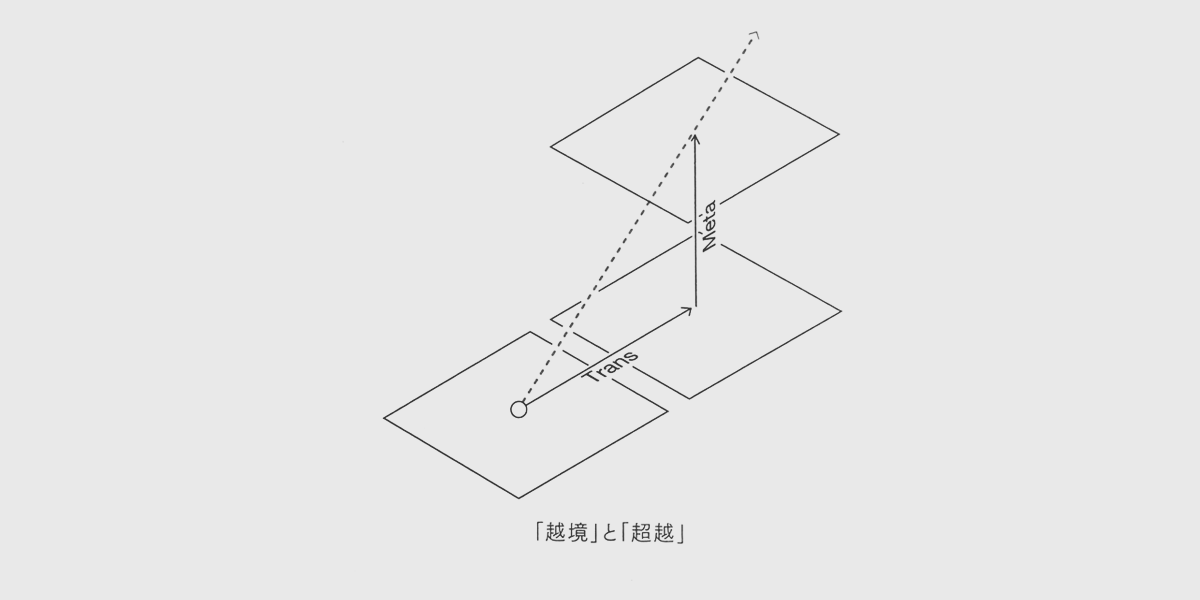
The essence of the Design Engineer is to approach problems from multiple perspectives. By becoming fluent in multiple disciplines (Meta-Shift) the design engineer crafts multiple lenses through which to asses a situation. Following Meta-Shift we arrive at Trans-Shift, adding an additional lens that looks from the top down. The culmination of all these viewpoints is Compound Vision.
Context
Design History
The book starts by looking at the broader design and technological context which lead us to where we are now. Starting with the Age of Hardware, literally hard ware, the physical tools we used to aid us to do something we couldn’t with our bare hands alone such as farming tools, ships, cannons, and steam engines. Following this we get into the Age of Electronics, more specifically “hard ware” with electronics, in the next age we add on software and finally arrive at our current age of all-of-the-above together with of networks and services, the key disruptive innovations of our era.
Age of Hardware → Electronics → Software → Service + Network
Small tangent: At the turn of each level the previous innovation is commoditised. For example, it is now technologically trivial to reach one million people. The question has now shifted into how can we create a compelling enough proposition that 1 million people will be reached? Although the technology (internet) has been commoditised, the platforms with which we reach the individuals (Google, Facebook) are still very much proprietary systems. Due to the scale at which they operate any one individual or company has the ability to get significant traction, yet they are nevertheless bound by the rules of the platform overlords. Even after a content creator has built a significant following or fanbase platforms can still decide to de-monetise or cut off origanic and recommendation traffic effectively killing the user’s reach.
Some new websites can struggle to gain visibility if they are not seen favourably by the algorithms (and people!) at Google and Facebook. Equally iOS apps and Youtube accounts can be arbitrarily taken down with little recourse available to affected creators.
It will be interesting to see if we can commoditise networks to move on to the next age of technological innovation. There are certainly many people trying by creating decentralised social networks to compete with Twitter and Youtube such as Mastodon and d.tube.
Nature of Problem
This section describes our approach to thinking about problems. The types of problems that require a specialist approach are usually large and complex. Traditionally we’ve attempted to break down complex problems into smaller subsets of problems which we can then tackle individually. Yet because the problems are often deeply interlinked composites, finding a solution to each sub problem often does not result in a solution for the whole.
Ineffability refers to the situation when even the problem statement can not accurately describe the real issue at hand. Without an accurate view of the problem it is impossible to create a valid solution.
Concept
Design Engineer
Design Engineers are a new breed of individual who posses experience and knowledge in the fields of design and engineering (duh). They help bring innovation and team integration to businesses by bridging the gap between these traditionally disparate departments.
When considering the Business-Technology-Creativity (BTC) trifecta of key skills required by a well-rounded team, Design Engineers supply the T-C connection. Ideally a team is made of up multi-disciplinary individuals who each bring a combination of two of these domains creating a well rounded and connected unit.
Trans-Shift
In order to truly qualify as a Design Engineer one must go through the process of “Trans-Shift”. Nobody is born a Design Engineer. Instead this is something that must be cultivated. By becoming an expert at one skill and then transitioning to another (while embracing the fact that this requires an active learning period) one obtains the ability to view problems from multiple angles.
Accoring to the book, at takram the disciplines of Service, Brand, Concept, UI, Electronics, Product, and Space are approached from both Design and Engineering angles. To be able to do this a Design Engineer might start as a software engineering specialist, then move into software design, hardware design and finally to hardware engineering. This gives them a well-rounded lens with which to tackle problems from both the design and engineering side.
Cultivating the trans-shift approach leads to Compound Vision, a key skill for Design Engineers.
Meta-Shift
Where Trans-Shift gives us the ability to look at problems from different angles, Meta-Shift helps us zoom out and look at the bigger picture. It helps us see external influences and side-effects that may not be immediately visible from the ground. The book has a beautiful proverb “the eyes of a bird and the eyes of a bug”. In most cases the bird eats the bug, so let’s make sure we all manage to make it to Meta-Shift.
While Meta-Shift is useful to get a good overall picture it also tends to overlook the details. Knowing how and when to zoom in and out is key to using this right. Most Design Engineers won’t transcend to Meta-Shift state permanently, but rather employ this tactic periodically to get an overview of the situation at hand.
Hypothesis
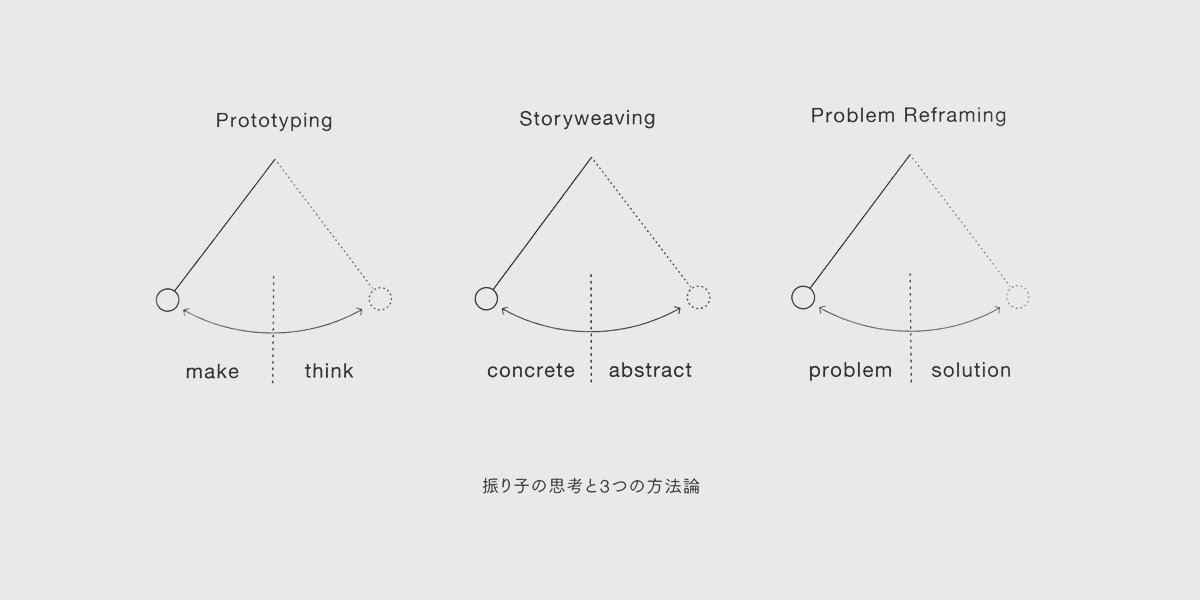
Utilising the Compound Vision gained through Trans-Shift and Meta-Shift, Design Engineers are able to construct hypotheses which they continuously validate and iterate on through Prototyping, Storyweaving and Problem Reframing.
Pendulum Thinking
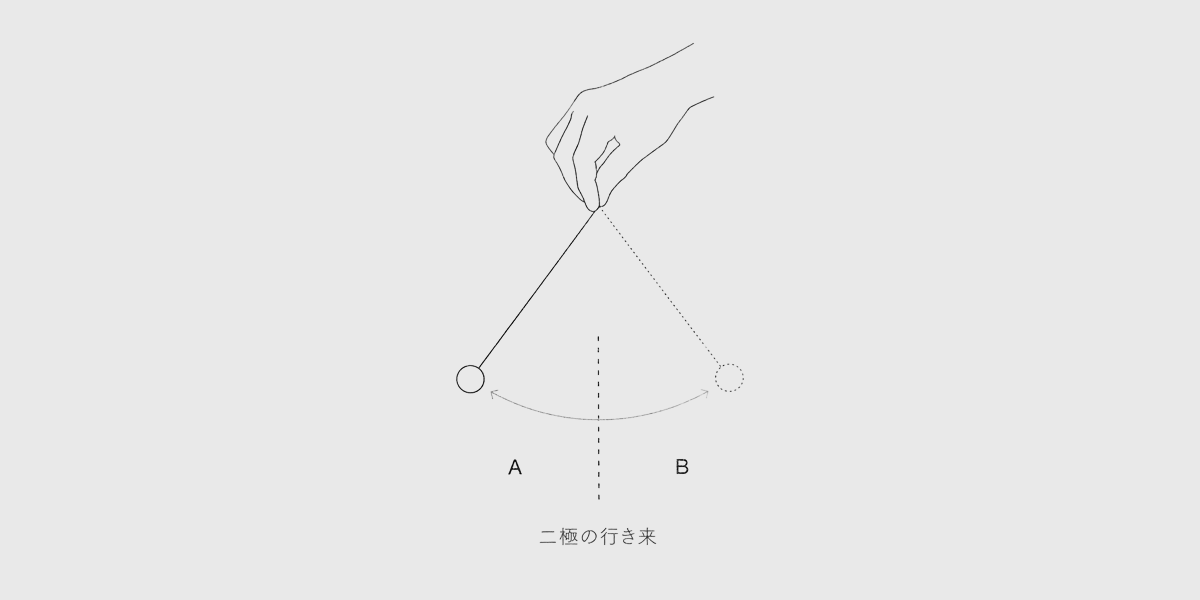
How is Pendulum Thinking applied in the real world? Rather than employing different modes of thinking in isolation Design Engineers simultaneously maintain Two Viewpoints. Rapidly switching between the two viewpoints they are able to consider the part and the whole at the same time. The abstract and the concrete. The bugs’s eye and the bird’s eye.
In many existing large organisations potential Design Engineers who have cultivated Compound Vision are often blocked by the silo of their job description and department. They are unable to exercise any skillset other than the one they are currently assigned to, quickly causing any swinging pendulum to grind to an unforgiving halt.
A skilful Design Engineer will regard the problem and potential solutions from multiple opposing extremes. While considering a hardware engineering problem, they might also consider how a solution through visual UI design might help change the hardware requirements.
The culmination of this approach is practiced through three methodologies: Prototyping, Storyweaving and Problem Reframing. Stay tuned for Part II of this article where I talk about these methods.
All images are copyright takram design engineering.